 by bsadmin
Nature’s Immune System
March 3, 2022Our immune systems protects us from myriad illnesses, ensuring our physical
and mental fitness. Similarly, Nature’s immune system – its ecosystems,
species, and habitats – require maintenance for it to be protected. Dr.
Rahmani makes compelling comparisons and provides intriguing insights on
protecting Nature in the aftermath of the COVID-19 pandemic.
During the last one year, the term “immunity” has become a buzzword thanks to the coronavirus pandemic, which started out as a piece of distant, innocuous
news in November 2019 from China, and rapidly escalated into a full-fledged
rage in the next four months, bringing the world literally to its knees. With no medicine in sight during the early stages, panicked doctors advised patients to boost their body’s immunity by eating healthy natural food, thinking positively, and exercising. Old grandmas’ remedies were dug out and WhatsApp University went overboard with recommendations of several questionable therapies, mostly based on superstition and ignorance, or just plain stupidity. One Baba even claimed to have developed a 100% effective vaccine for COVID-19, insulting the intelligence of most Indians and providing fodder to stand-up comedians.
The dictionary definition of immunity is “the ability of an organism to resist
a particular infection or toxin by the action of specific antibodies or sensitized white blood cells”. The Oxford Learners dictionary defines it as “the body’s ability to avoid, or not be affected by infection and disease”. Google tells us that the adjective immune comes from the Latin word immunis, which means “exempt from public service.” If you are protected — or exempt — from disease, injury, work, insults, or accusations, then you are immune. Thus, vaccinations serve to make people immune to certain diseases. Our immune system plays
important role in protecting us from
germs, and even some cancers. It is made
up of various organs, cells, and proteins,
and is perpetually at work throughout our
lives, without us realizing it. Children’s
bodies are particularly strong against
infections, and doctors even advise
mothers to allow their children to play
in the garden, inadvertently eat mud,
get some small injuries while playing,
climb trees, and play fight. They will get
infected and their strong, growing bodies
will develop early immunity to many
diseases. By contrast, children who are
kept in clean and sterile environments
are likely to fall sick as soon as they
are exposed to germs – the Hygiene
Hypothesis Syndrome, as the medical
fraternity calls it. It says that too clean
an environment does not allow exposure
to germs that give the immune system a
chance to develop resistance to diseases.
Like our healthy body has a strong
ability to fight against germs, similarly,
Nature has developed its own immune
system. Scientists call it ‘Ecological
Resilience’. Nature has an innate capacity
to react to disturbances by resisting
damage and recovering. Some recoveries
are quick, for example, fire in grasslands,
flooding, or windstorms, while others
may take decades, or even centuries
(volcanic eruptions). However, Nature
recovers for sure, however long it may
take.
Like healthy bodies fight germs
successfully, Nature’s recovery is faster
when she is healthy. Our immune system
weakens as we become old or sick,
similarly, Nature’s immune system also
weakens by deforestation, pollution,
frequent oil spills, biodiversity loss, the
introduction of invasive species, and
man-made climate change.
During last year’s lockdown, Nature
showed us how quickly it can recover by
having cleaner air, clear skies, cleaner
water bodies, and more natural sounds.
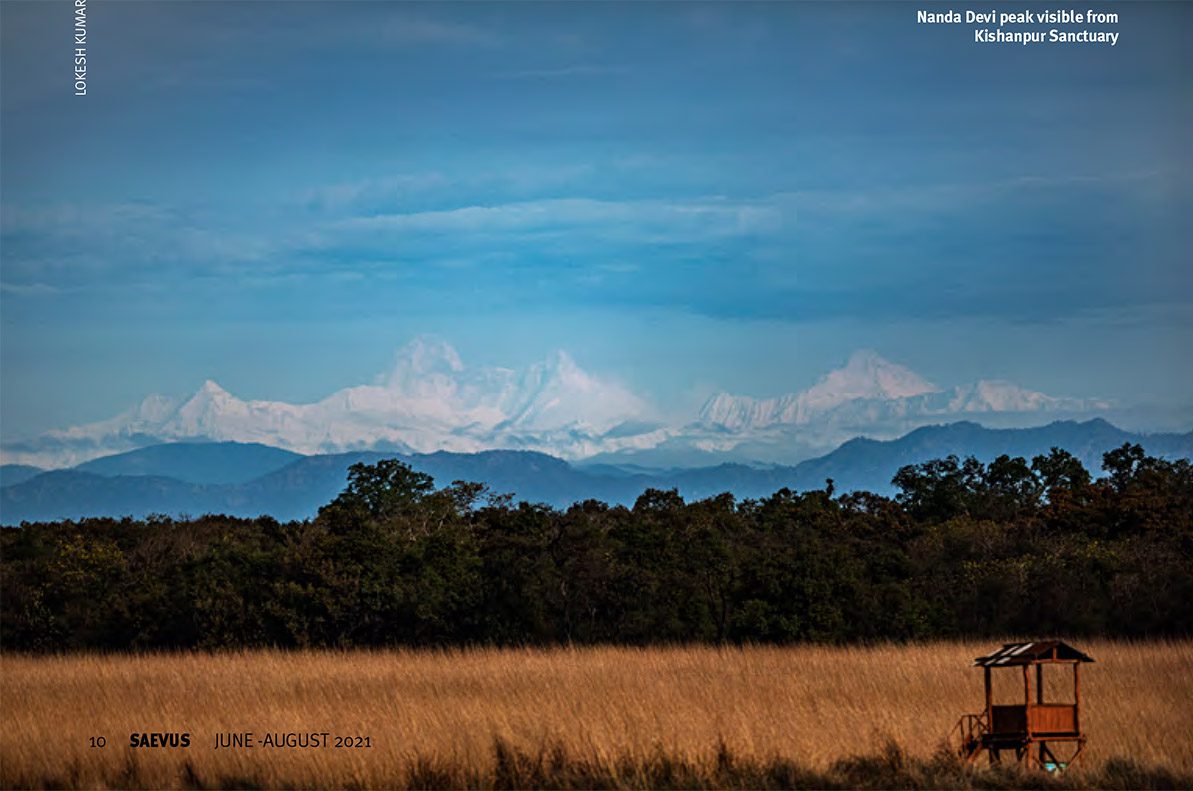
Social media was full of pictures of snowcovered
mountains, taken from 60-100
km – a treat not visible during ‘normal
times.’
In the early 1970s, the Gaia hypothesis
propagated by chemist James Lovelock
and microbiologist Lynn Margulis showed
that the Earth is like a superorganism
where everything is interconnected.
It proposes that “all organisms and
their inorganic surroundings on Earth
are closely integrated to form a single
and self-regulating complex system,
maintaining the conditions for life on
the planet.” In an article published in
Geophysical Research Letters (February
2021), I read that the dust from the
Sahara fertilizes the Amazon forests by
providing missing nutrients. The authors
say that the dust is picked up from the
Bodélé Depression in Chad from an
ancient lake bed where rock minerals
composed of dead microorganisms
are loaded with phosphorus. In any
natural forest, the fallen leaves, twigs,
and flowers, if not eaten by herbivores,
quickly become part of the soil and their
nutrients are reabsorbed by the roots of
the plants. However, due to heavy rains,
many nutrients, including phosphorus
are leached to the streams and rivers,
enriching water but depleting the soil.
The study found that the phosphorus
that reaches Amazon soils from Saharan
dust, an estimated 22,000 tons per year,
is about the same amount as that lost
from rain and flooding, Amazing, isn’t
it? Closer home, Delhites will know how
crop burning 100 km away in Punjab
impacts their air quality. Some say that
the chemicals released by the tanneries
of Kanpur in the Ganga reach the Hoogly
(though in diluted form).
Natural forests, wetlands, grasslands,
rivers, and oceans are the ‘immune
system’ of the Earth. They make her
healthy, pulsating, and life-giving. Each
natural ecosystem boosts the immunity
of the Earth to fight perturbation,
cataclysms, tsunamis, tornados,
and other natural disasters (like a
human healthy body fights germs). By
exterminating species, we are disturbing
evolutionary processes. The more we
destroy the natural ecosystems, species,
and habitats, the lesser ability the Earth
has to recover quickly, and the lesser
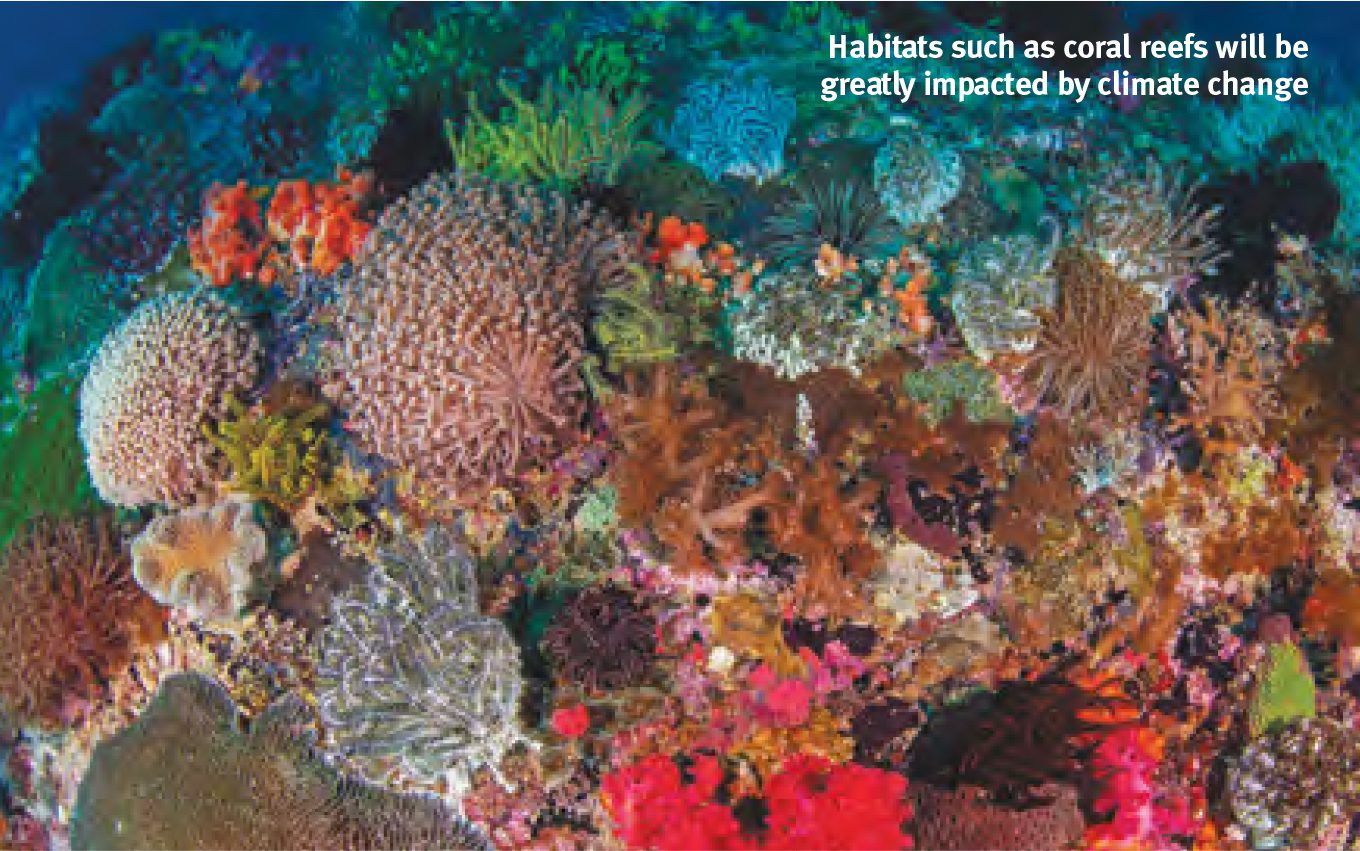
is its ability to fight man-made climate
change.
A recent editorial in the Times of India
(23 April 2021) on the raging COVID-19
pandemic in India, writes “Widespread
vaccination is the only COVID endgame
in humanity’s arsenal.” I am taking the
liberty to change it slightly “Widespread
protection of Nature is the only climate
change endgame in the Earth’s arsenal”.